
What is Webflow? A 3-Minute Primer for B2B Professionals

"I keep hearing about Webflow, but what actually is it?" This is a question I’ve been hearing a lot lately from B2B marketing and IT managers. It’s not WordPress, it’s not STUDIO, yet the name keeps coming up—and people aren't quite sure what it does.
In this article, we’ll break down what Webflow is, the three reasons it’s being chosen by B2B companies, and even the cases where it might not be the right fit—all in just three minutes. We’ll explain it from the perspective of Booost, a team specializing in Webflow development, in a way that’s easy to present to decision-makers.
3 reasons why it’s hard to define "What is Webflow?"
Webflow’s brand awareness in Japan is still limited, and we often hear from people who struggle to explain it when they propose it internally, only to be met with, "What kind of tool is that? How is it different from WordPress?"
The truth is, Webflow can be described as a "no-code tool," a "CMS," a "hosting service," or a "design tool," making it difficult to define in a single phrase. Most search results are filled with technical jargon for engineers, leaving a lack of clear, accessible information that B2B managers can use for internal approval processes.
This ambiguity is the biggest factor slowing down the initial decision-making process. Let’s start by grasping the essence of Webflow through three key concepts.
What is Webflow? Explained in 3 keywords
In short, Webflow is a "design tool and hosting platform that allows you to build professional-grade websites without writing code." Launched in the U.S. in 2013, it has been used by designers, agencies, and companies worldwide for over a decade.
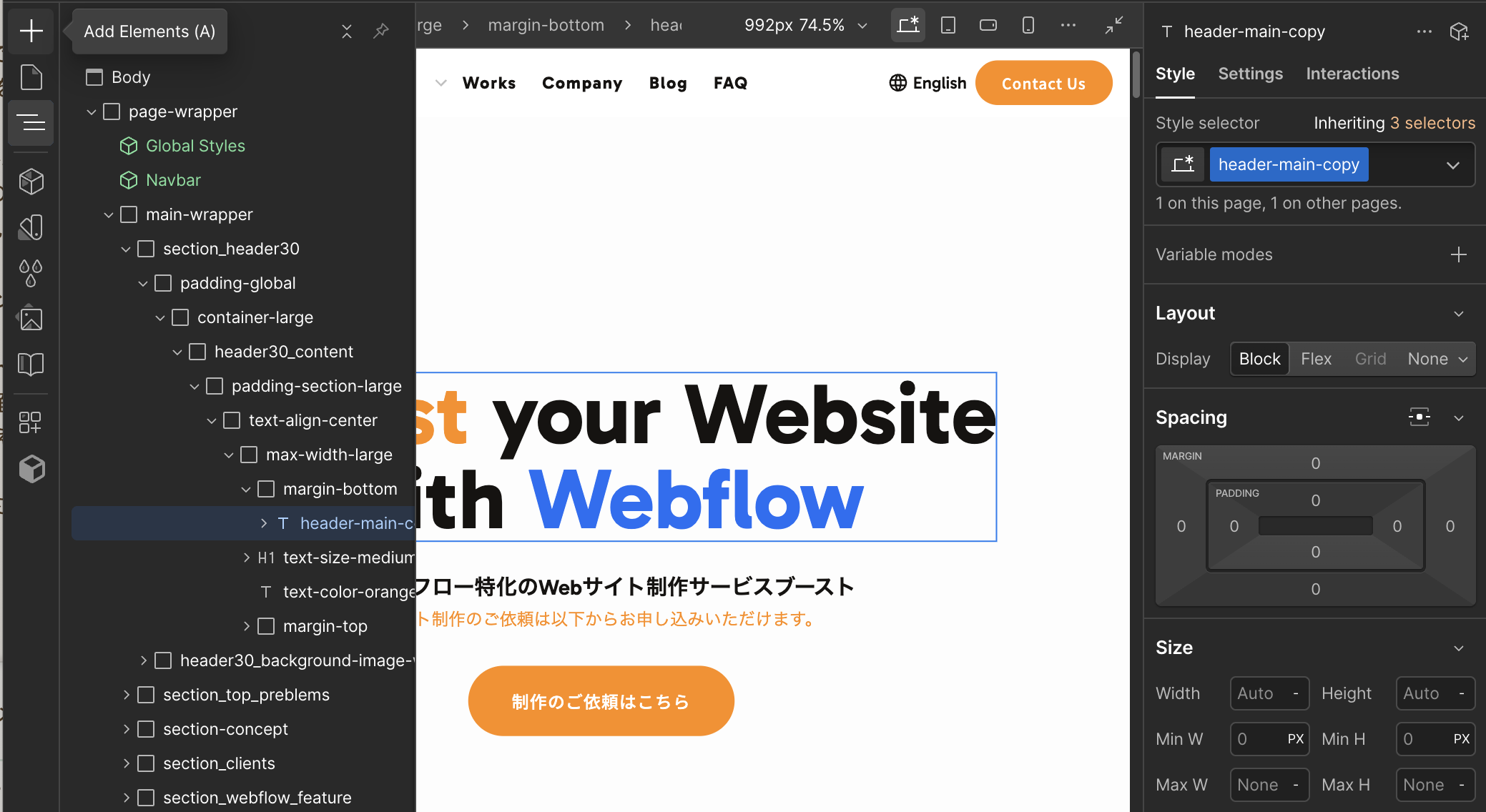
Build without code
You can assemble layouts using drag-and-drop without having to hand-code HTML, CSS, or JavaScript. However, because it generates standard HTML/CSS under the hood, it ensures SEO and structural integrity. The concern that "no-code means lower quality" simply doesn't apply to Webflow.
Unrivaled design freedom
Compared to other no-code tools like STUDIO or Peraichi, you can adjust everything down to the pixel—including margins, typography, and animations. The ability to implement designs that strictly adhere to brand guidelines without compromise is a major reason why it is chosen for B2B corporate websites.
All-in-one hosting
Server contracts and domain management are handled entirely within Webflow, with high-speed global delivery via AWS CDN. The biggest difference from WordPress is that it’s integrated into a single platform, rather than requiring you to manage a combination of CMS, servers, and plugins separately.
For more detailed pros and cons, seePros and cons of Webflow.
3 reasons why B2B companies choose Webflow
Next, let’s look at the three reasons why Webflow is the preferred choice.
Reason 1. Marketing teams can handle updates themselves
B2B websites frequently require minor updates, such as adding case studies, updating campaign information, or revising recruitment details. With WordPress, the risk of breaking the layout even with minor edits often leads companies to rely on external agencies for every change.
Webflow featuresthe Editor,a visual editing interface that comes standard, allowing marketing teams to update text and images directly without risking the layout designed by professionals. This reduces outsourcing costs while increasing the speed of your content updates.
Reason 2: Virtually no security concerns
WordPress sites often rely on 20 to 30 plugins, which frequently become sources of vulnerabilities. According to research by the security firm Sucuri, over 90% of cyberattacks targeting CMS platforms are aimed at WordPress.
Webflow does not use plugins; forms, CMS, animations, and hosting are all provided as standard platform features. Since Webflow automatically applies security patches, IT departments can rest easy knowing there are fewer components to manage. For more details, please seeWebflow CMS security features.
Reason 3: Native multilingual support
An increasing number of B2B companies are considering global expansion. Achieving multilingual support in WordPress typically requires paid plugins like WPML, which can make URL structures, hreflang tags, and translation workflows complex to manage.
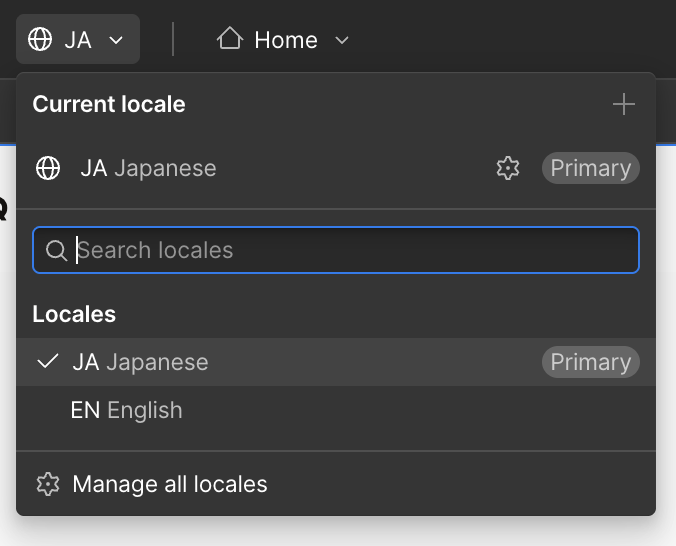
In 2023, Webflow officially released itsLocalization feature,which integrates language-specific URLs, automatic hreflang tag generation, and language-switching editing within the visual editor. For two languages, such as Japanese and English, you can manage everything using standard features without needing additional plugins or licenses.
Cases where Webflow may not be the right fit
On the other hand, there are cases where Webflow is not the ideal solution. Please check these points before deciding on implementation.
- Large-scale e-commerce sites:If you require complex inventory management, multi-step checkout flows, or API integrations with core systems for inventory, Shopify is a better functional fit.
- Large-scale media sites with over 10,000 articles:Since Webflow has a limit on the number of CMS items (which varies by plan), it is not practical to use it as a standalone platform for massive blogs.
- Web apps tightly coupled with existing systems: Full-scratch custom development is better suited for cases requiring real-time integration with core systems.
Conversely, areas where it is a perfect fit include:B2B service sites, corporate sites, case study sites, landing pages, and recruitment sites.These are the areas where Webflow excels, and the majority of Booost's implementation projects fall within this range.
For a detailed comparison with WordPress, seeThe End of the WordPress Era: Why Webflow is the New Standard, and for a comparison with STUDIO, seeSTUDIO vs Webflow.
Next steps for implementation
Once you have a grasp of what Webflow is, the next phase is to specifically consider its application to your company's site. Organizing information in the following order will make it easier to proceed with internal approval.
- Inventory of current issues: List your update frequency, security requirements, and the need for multilingual support.
- Reviewing pricing plans: Understand the difference between Site Plans and Workspace Plans, and estimate annual costs (seeWebflow Pricing Plans).
- Deciding on migration from WordPress:7 Signs It’s Time to Consider a MigrationSelf-Assessment
- Consult a Webflow-Specialized Partner: Choosing an Agency That Understands the Design Philosophy
As an agency specializing in Webflow development, Booost provides end-to-end support, from pre-implementation requirements gathering to design, development, and multilingual management.
Summary
Webflow is an ideal website building platform for B2B companies, offering a high-level balance of design flexibility, ease of operation, security, and multilingual support. It is particularly beneficial for companies where the marketing department leads content updates while maintaining a high-quality site that aligns with the brand image. However, depending on the use case—such as large-scale e-commerce or web applications requiring integration with complex core systems—other options may be more suitable. Therefore, the key is not just whether Webflow is "good," but whether it aligns with your company's specific goals and operational structure.
If you would like to discuss specific questions such as "Is it really the right fit for our site?" or "What are the benefits of migrating from our current WordPress site?",Booost Free Consultationplease feel free to contact us. We will provide an honest assessment of whether Webflow can solve your needs, based on the current state of your WordPress site or existing CMS.
Booost is a web development service specializing in the no-code tool "Webflow."
We maximize your website's customer acquisition power through three optimizations: design, marketing, and translation.

