
.png)
Why Webflow is the Best Choice for Multilingual Website Development | Choosing a CMS for Successful Global Expansion

Many companies struggle with the question of which CMS to use when expanding their services into international markets.
While many Japanese companies have traditionally used WordPress for multilingual sites, they are increasingly facing issues with security risks tied to plugins and slow access speeds from abroad.
This article explains why Webflow is an excellent choice for building multilingual sites, focusing on three key areas: security, SEO, and operational costs.
Common pitfalls in building international multilingual sites
Building a website for global expansion presents challenges that differ from those of a domestic-focused site.
The first issue many companies encounter is WordPress security. Every time a multilingual plugin (such as WPML or Polylang) or a form plugin is added, the risk of vulnerabilities increases, and it is not uncommon for sites to be attacked through these plugins. For businesses handling the personal information of international users, a security incident can cause serious damage to business continuity. As a result, there has been a clear increase in the number of companies considering a migration away from WordPress over the past few years.
The next challenge is page load speed. Sites hosted on servers in Japan can take 3 to 4 seconds to load when accessed from the US or Europe. According to Google research, 53% of mobile users abandon a site if it takes longer than 3 seconds to load, making a global content delivery infrastructure essential when targeting international users.
Furthermore, a commonly overlooked issue is the lack of proper technical implementation for multilingual support. Simply translating content into English using Google Translate is not enough, as the HTMLlangattribute andhreflangtags will not be configured correctly, meaning Google will not recognize the page as an "English page." In other words, even if the site looks like it is in English, it will not appear in search results for English-speaking regions.
Webflow’s security and global infrastructure support multilingual site development
Webflow solves these challenges with a fundamentally different approach than WordPress, specifically designed for global expansion.
Security design that requires no plugins
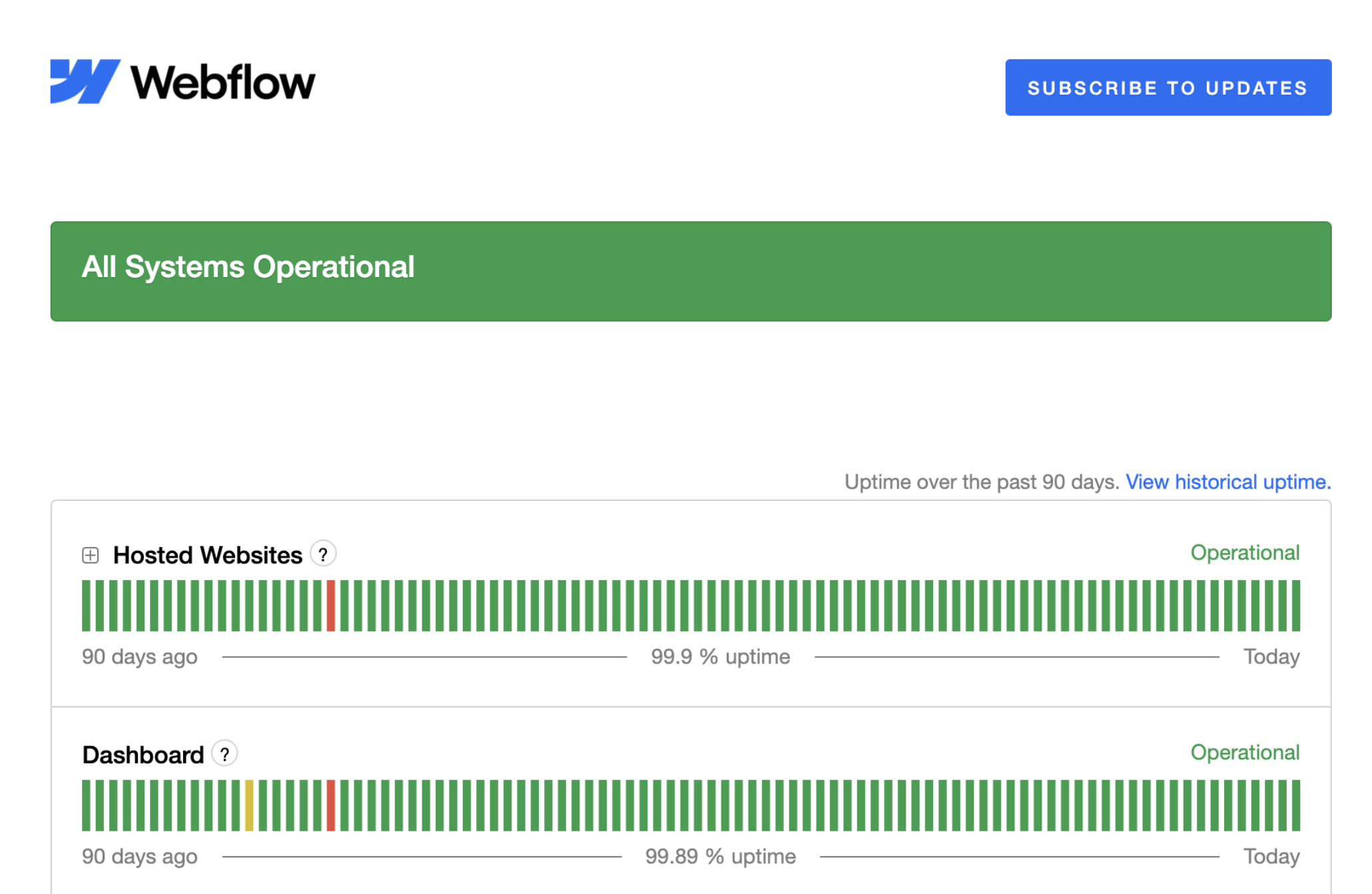
While WordPress requires companies to manage security updates and plugins themselves, Webflow centralizes security management at the platform level. With automatic SSL certificate renewal, DDoS protection, and a built-in WAF (Web Application Firewall), you no longer have to worry about vulnerabilities caused by plugins.
Webflow’s operations team responds quickly to incidents, and with engineers distributed around the world, they provide 24/7 monitoring. For more details, please seeThe end of the WordPress era? Why Webflow is becoming the "next standard"as well.
Global delivery via Fastly CDN
Webflow uses the Fastly CDN, which has over 100 points of presence worldwide, as a standard feature, ensuring fast loading speeds even for traffic from the U.S. and Europe. Since page speed is a ranking factor in Google's Core Web Vitals, the benefits of a CDN for international sites are significant. Major Japanese companies like Rakuten and Honda have adopted Webflow, proving its reliability at the enterprise level.
Maximizing Search Traffic for Multilingual Sites with Webflow SEO
Simply translating your content is not enough to capture search traffic on international sites. Webflow comes with the technical foundation required for multilingual SEO built right in.
Automatic hreflang and lang attribute configuration
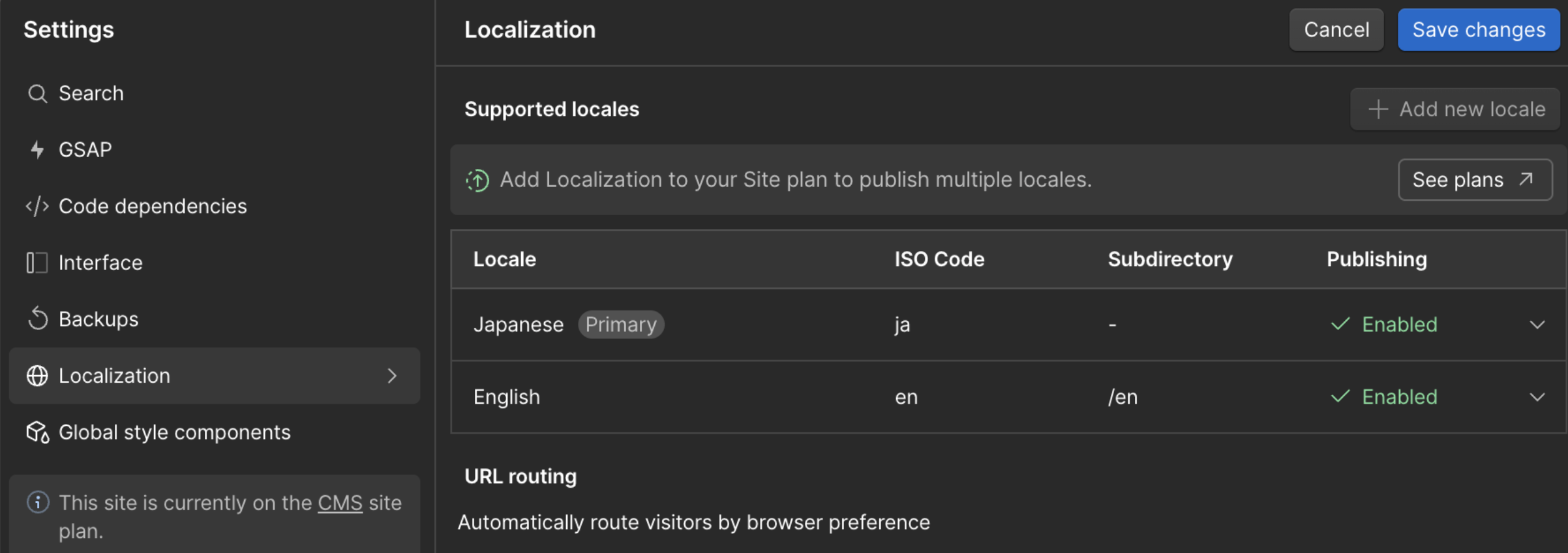
With Webflow's Localization features, each language page is automatically assigned the correcthreflangtag andlangattribute. For example, English pages are set tolang="en"and Japanese pages tolang="ja", allowing Google to accurately recognize the target language of each page.
While WordPress is prone to SEO issues caused by misconfigured multilingual plugins, Webflow manages these at the platform level, significantly reducing the risk of configuration errors. For more on managing multilingual sites,Pitfalls of Managing Multilingual Webflow Sites: Always Use "Page Selection" for Relative Linksis also a helpful resource.
Structured Markup via JSON-LD
Webflow allows you to embed JSON-LD structured markup directly via the custom code area in the editor. By setting up schemas for organizational information, FAQs, and breadcrumbs, you can improve your chances of appearing in rich snippets and optimize for AI-driven search.Leading Search Optimization in the AI Era: The "SEO + AEO" Strategy with WebflowPlease also refer to.
In-house management of global sites with no-code
A multilingual site isn't finished once it's launched; continuous content updates are what drive results. Webflow's no-code environment is designed specifically for in-house operation.
Non-engineers can make updates using Editor Mode
With Webflow's Editor Mode, you can intuitively edit text, swap images, and add new blog posts directly in your browser. Since you no longer need to rely on an agency for every change, you can increase update frequency while reducing long-term costs.
We often hear concerns that the English-only management interface might be difficult to use. However, for companies expanding globally, an English UI actually facilitates smoother collaboration with staff at overseas branches. By creating internal manuals, even staff who aren't fluent in English can manage the site without issues.
Expanding page count directly impacts SEO results
Once you have a system in place for in-house updates, your content frequency will naturally increase. When launching an overseas site on a new domain, increasing the number of pages directly affects how quickly Google and AI search engines index your site. By regularly adding content like blogs, FAQs, and case studies, you can steadily build up traffic from search engines.
In fact, many companies achieve success by using ads to drive traffic during the initial launch phase, then gradually reducing ad spend as their SEO gains momentum.
Summary
Choosing Webflow for multilingual site production is a logical decision for security, global delivery, SEO, and in-house operations.
Here is a summary of the key points from this article:
- Plugin-free security design reduces risks associated with handling overseas user data.
- Fastly CDN ensures high-speed performance regardless of where in the world users are accessing your site.
- Native support for hreflang tags and structured markup provides a solid foundation for multilingual SEO from day one.
If you are considering building a new international site or migrating from WordPress, why not try creating a small English-language page in Webflow first? At Booost, we provide consultations for multilingual site production and global site development using Webflow. Please feel free tocontact us.
Booost is a web development service specializing in the no-code tool "Webflow."
We maximize your website's customer acquisition power through three optimizations: design, marketing, and translation.

