
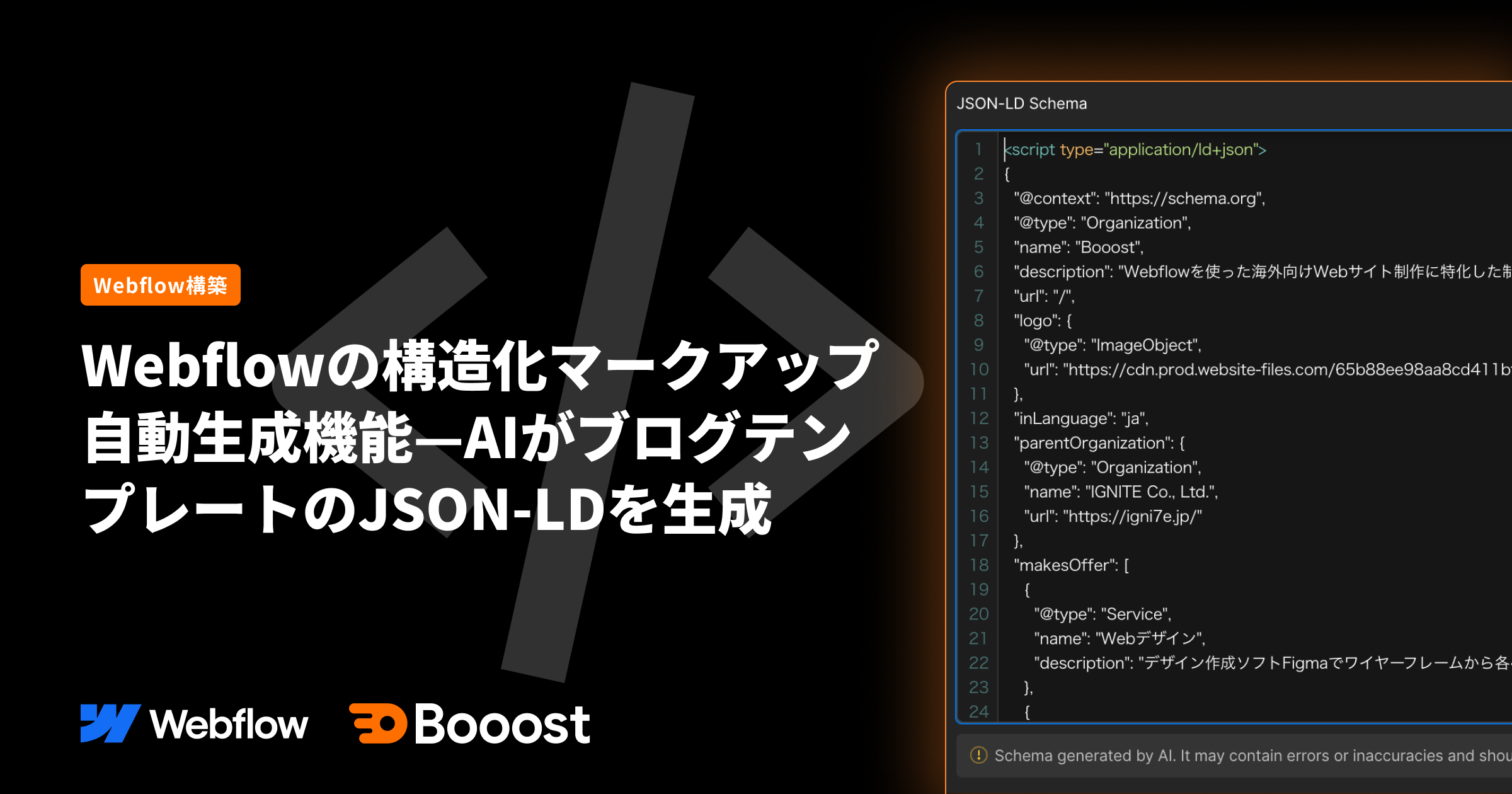
Webflow's Structured Markup Auto-Generation Feature—AI Generates JSON-LD for Blog Templates

I discovered that when using Webflow's blog category templates, there's a feature that automatically generates structured markup (JSON-LD) using AI. By leveraging this feature, you can streamline SEO for your blog posts and ensure search engines properly recognize your content.
This article will explain the feature's overview, important considerations during implementation, and how it can be applied to other pages.

What is Structured Markup?
Structured markup (Structured Data) is a data format used to clearly communicate the content of a web page to search engines. By writing it in JSON-LD format, search engines can accurately understand information such as the page type, author details, publication date, and category.
Especially for blog posts, providing the following information as structured markup can improve their appearance in search results and increase the likelihood of rich snippets (additional information displayed in search results) appearing.
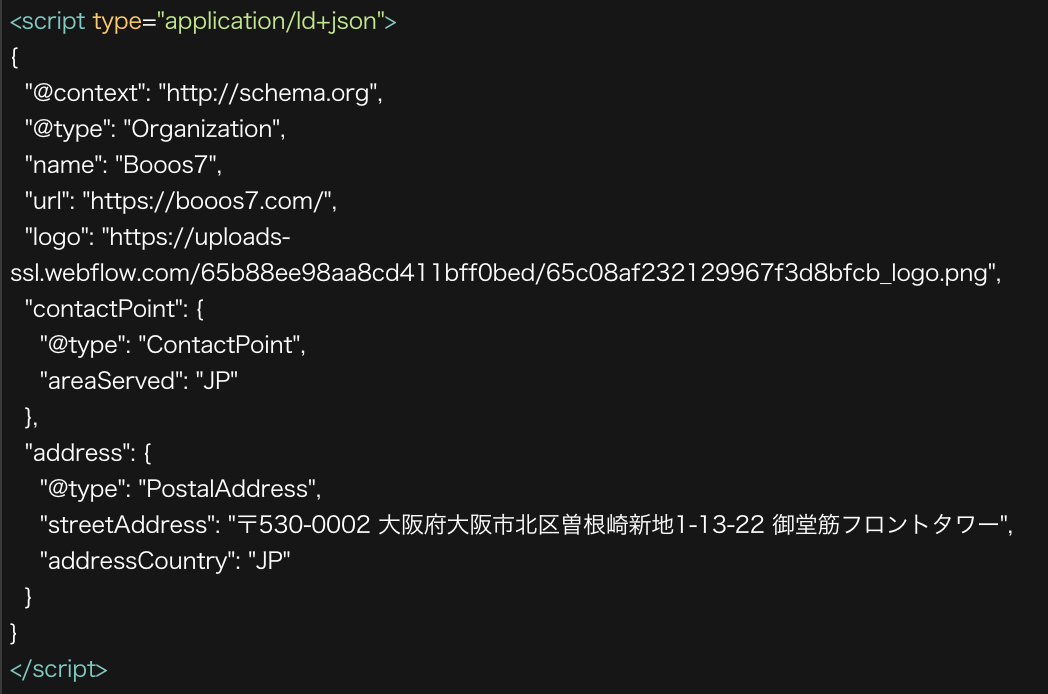
- Article title and description
- Author information
- Publication and update dates
- Categories and tags
- Company or organization information
Features of Webflow's Automatic Generation Function
Webflow's blog category templates are designed to automatically generate structured markup using AI. The main features of this function are as follows:
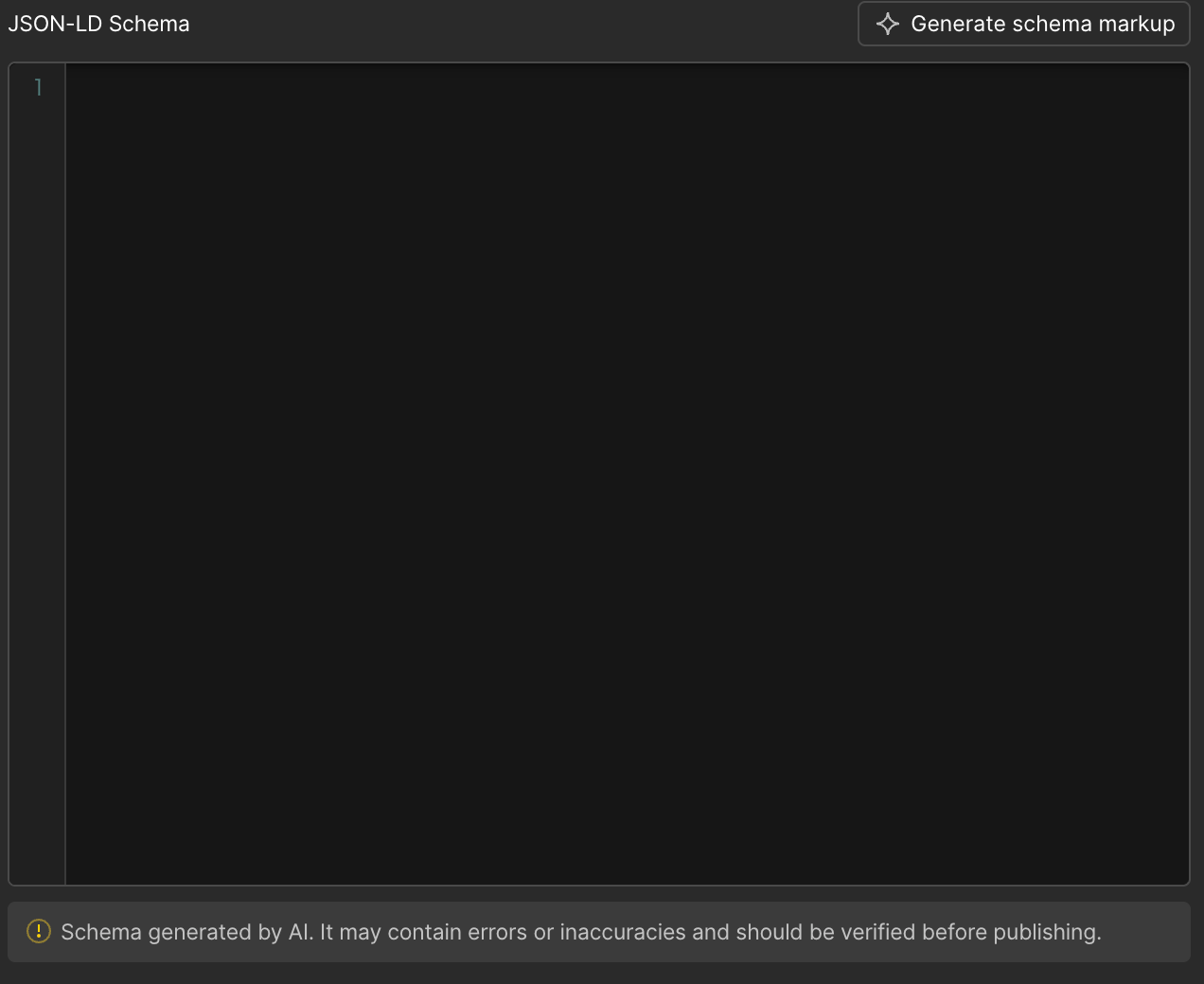
Appropriately divided by component
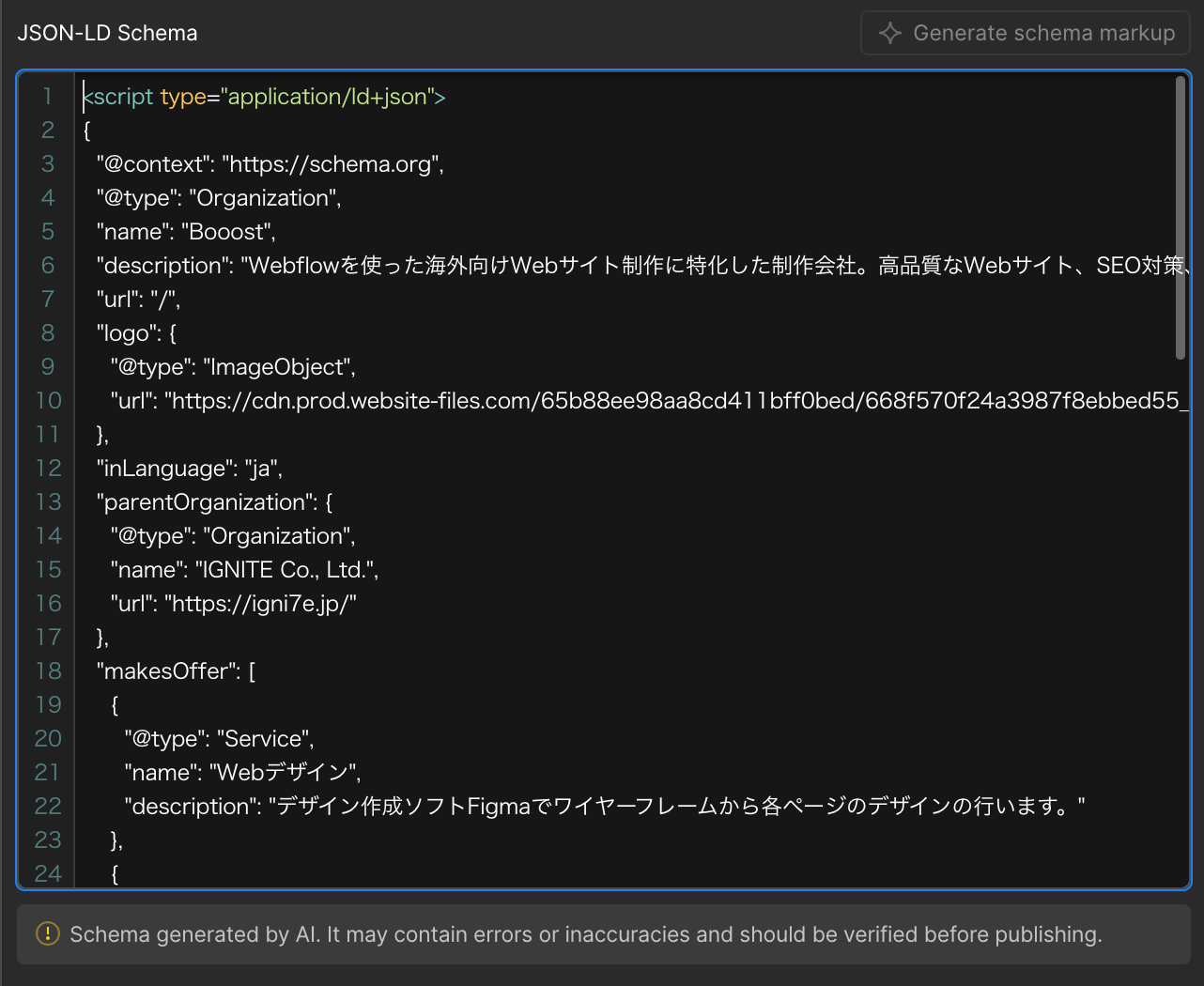
Structured markup is appropriately divided and generated for each component of the page. This offers the following benefits:
- Clarifies the role of each section
- Simplifies maintenance
- Allows updating only necessary information
Company information is automatically included
Structured markup automatically includes company and organization information. This communicates the following details to search engines:
- Company name
- Company URL
- Company logo
- Contact information
When this information is properly set, company details will appear in search results, which can lead to increased brand recognition.
Implementation Considerations
When implementing the structured markup automatic generation feature, keep the following points in mind:
Items to check before implementation
- Whether your current blog template supports the new feature
- Whether there are any conflicts with existing structured markup
- Whether company information is correctly set up
Application to other pages
This feature may be applicable not only to blog category templates but also to other pages. Consider applying it to pages such as:
- Service introduction pages
- About Us pages
- Contact Us pages
- Product/service detail pages
However, you must select the appropriate type of structured markup based on the structure and purpose of each page.
Summary
Webflow's structured markup automatic generation feature is an effective tool for streamlining SEO for blog posts. The automatic generation of properly structured markup by AI offers the following benefits:
- Content is accurately communicated to search engines
- Rich snippets are more likely to appear
- Maintenance burden is reduced
- Company information is also automatically included
Before implementation, we recommend checking your current template's compatibility and consistency with existing structured markup, and considering its application to other pages if necessary.
Booost is a web development service specializing in the no-code tool "Webflow."
We maximize your website's customer acquisition power through three optimizations: design, marketing, and translation.

